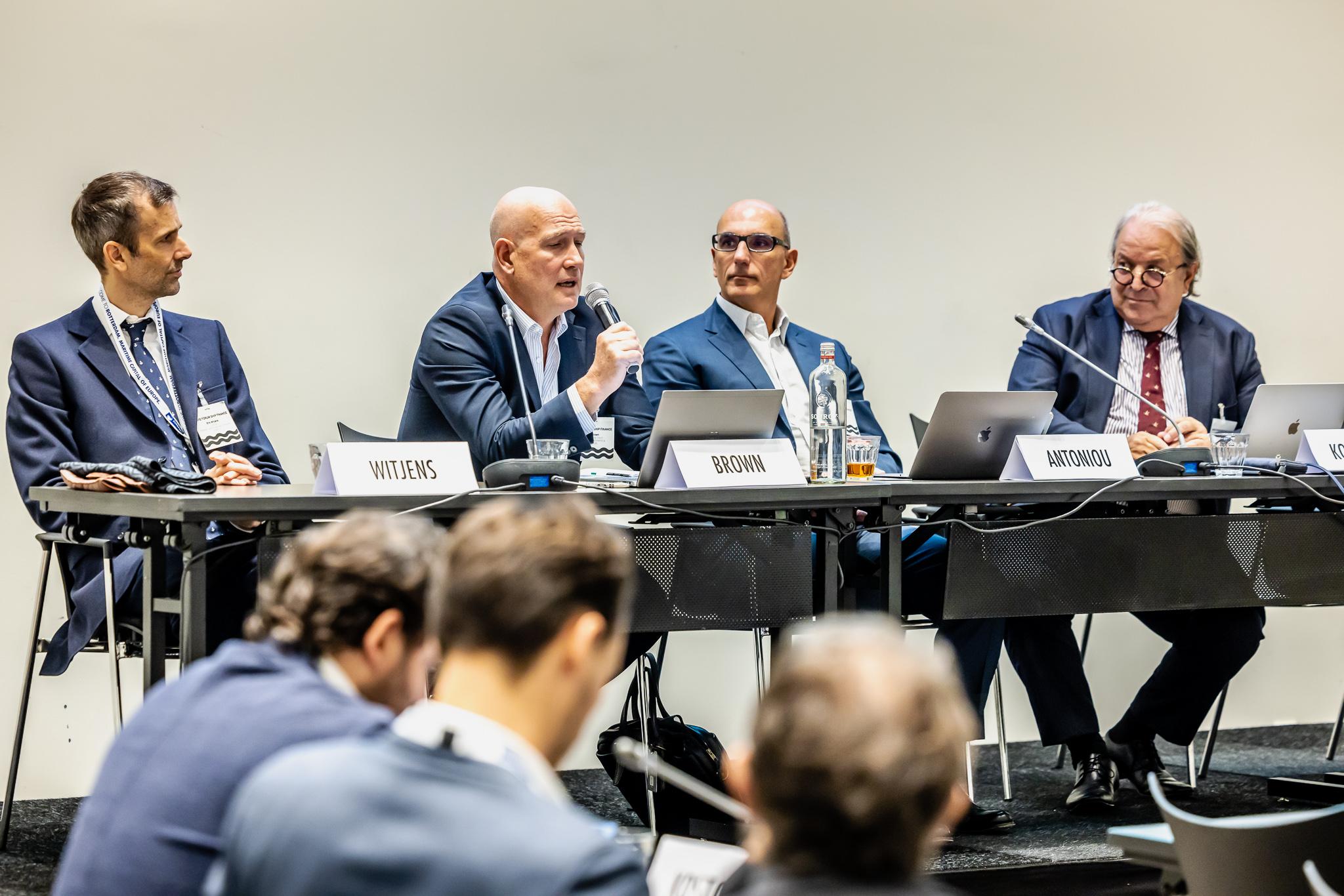
Global Maritime Leaders Convene in Rotterdam for the 24th Mare Forum Ship Finance 2025


.jpg "Global Maritime Leaders Convene in Rotterdam for the 24th Mare Forum Ship Finance 2025")
The 24th Mare Forum Ship Finance, held in conjunction with Europort 2025, brought together shipowners, investors, banks, regulators, and industry experts for a dynamic debate on how geopolitics, decarbonisation, and finance are reshaping the future of global shipping. This year’s edition, hosted in the beating heart of Europe’s maritime capital, arrived at a pivotal moment for the industry. As financial institutions grow increasingly cautious and shipowners face costly decarbonisation and compliance decisions, the forum offered a candid reflection on how global forces are reshaping both the risks and rewards of maritime investment.
The opening discussion, titled "Geopolitics First! - Game Changed”, set the tone for the two-day event. Panellists took a hard look at the new global order, examining how shifting alliances and regional conflicts are redrawing trade routes and redefining maritime competitiveness.
Speakers warned that Europe risks losing its edge to Asian and American rivals as economic headwinds, regulatory burdens, and energy insecurity weigh on its maritime strength. "We are navigating an era of fragmentation,” one participant noted, "where shipping is not only about trade: it’s about strategy.”
Sustainability and the energy transition then took centre stage in Session 3, "Still Waiting for Godot… While the Clock Runs Out.” The conversation exposed the slow march toward low-carbon shipping, as experts weighed in on alternative fuels, onboard carbon capture, and even nuclear propulsion.
With uncertainty persisting over fuel infrastructure and supply chains, speakers questioned whether decarbonisation represents a "goldmine or money pit.” The consensus: progress is undeniable, but timelines remain uncertain and the financial community is struggling to keep pace with regulatory ambition.
Smart Investment and the Human Factor
Attention then turned to the markets in Session 4, as financiers and analysts debated where the smart money should go next. With AI, digitalisation, and automation rapidly transforming shipping, investors are seeking clarity on which sectors offer sustainable returns in an unpredictable decade.
But technology was only part of the equation. Human capital - one of Europort 2025’s core themes - also featured prominently. During Session 5, "The Shipowners’ Strategies - The Gamble for Tomorrow,” panelists stressed that talent, not just tonnage, will determine the sector’s future resilience.
Speakers addressed the challenges of attracting new professionals, especially women and younger entrants, to ship finance roles. Citing the 2024 IMO-WISTA Women in Maritime Survey, they highlighted a decline in female representation since 2021. "We’re losing diversity when we need it most,” one participant warned, calling for a renewed focus on empowerment, mentorship, and decision-making autonomy among younger professionals.
Finance Meets Strategy
One of the forum’s most anticipated exchanges came during "Finance & Strategy - What Shipowners Want, What Capital Provides.” The panel juxtaposed the perspectives of owners and financiers, revealing the complex interplay between risk, regulation, and innovation in today’s capital markets.
While speakers agreed that global liquidity remains strong, they cautioned that Basel regulations are making bank lending increasingly procyclical and skewed toward larger, well-capitalised firms. As a result, alternative funding sources, from leasing and debt funds to private equity, are playing a growing role in fleet expansion and green investments.
Despite low historical loss rates in ship finance, smaller operators continue to face higher barriers to entry, with market volatility and cyclical downturns adding to the uncertainty. The overarching question, echoed by several panellists: how can capital allocation in shipping become both smarter and fairer?
The European Flag Debate: Sovereignty Meets Integration
With the Netherlands serving as the host nation, the final session shifted focus to Europe’s role as a maritime and financial hub, and ended on one of the conference’s most provocative questions: Should Europe one day sail under a single "European flag”?
The idea, inspired by comparisons to Frontex and other EU-level integrations, sparked an animated exchange among participants. Proponents argued that a unified European flag could create a level playing field, reduce intra-European competition, and boost global competitiveness against flags of convenience such as Panama, Liberia, and the Marshall Islands.
However, others pointed to formidable political and legal barriers. A tax lawyer reminded the room that such a change would require unanimous approval from all EU member states, comparable to taxation decisions at the European Council. "A flag represents sovereignty,” he said. "Changing it means changing the law that governs the ship itself.”
Critics also warned that merging national registries could reduce Europe’s influence at the IMO, replacing multiple national voices with a single, diluted one. Others questioned whether an EU flag could adapt quickly enough in an era of fierce competition, bureaucracy, and regulatory inertia. "The largest crude tanker,” one participant quipped, "is easier to turn than EU maritime policy.”
Despite the divergence of views, many saw value in the discussion itself. As one moderator noted, the debate reflects Europe’s ongoing struggle to balance integration with identity, a theme that resonates far beyond the maritime world.
An Inconclusive Yet Inspiring Finale
As the session drew to a close, the moderator invited a show of hands, for, against, or undecided. The result? "Inconclusive,” he announced with a laugh, promising to revisit the question at next year’s 25th Mare Forum Ship Finance.
The conference ended on a convivial note, with speakers thanking attendees for "a very nice conference” and inviting everyone to celebrate the forum’s long-standing tradition of open dialogue and forward thinking over well-earned drinks.